About Birkenstock

The mastery of shoe making and the
devotion to bring style and comfort
to the people have persisted from one generation to the next
Over many generations, the Birkenstock company has gathered extensive
knowledge in the area of foot health. This knowledge and experience is the
foundation of their proven, high quality Birkenstock sandals and shoes.
243 years ago, Johann Adam Birkenstock was born in Langenberg, Germany.
He was the great-great-great grandfather of Karl Birkenstock, who is currently
a part of this German company's successful history.

Chronicle

1774

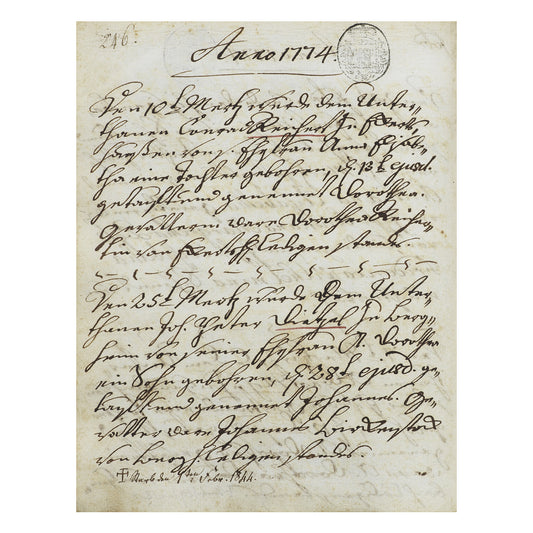
Johann Adam Birkenstock registered in the church archives as "vassal and shoemaker".

1896

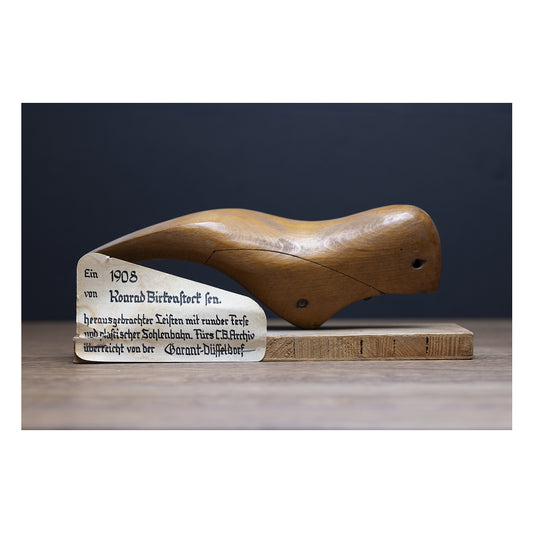
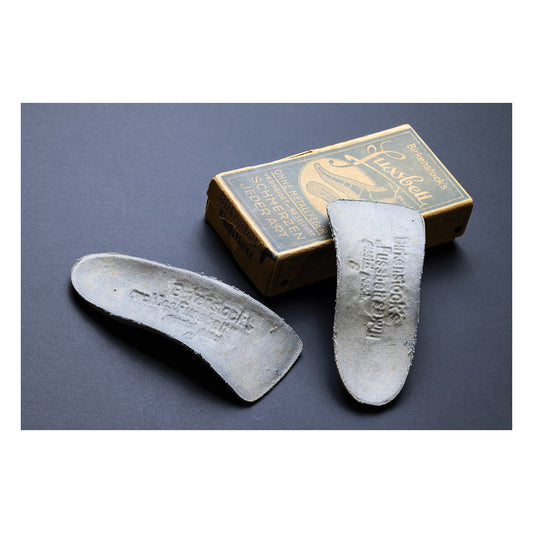
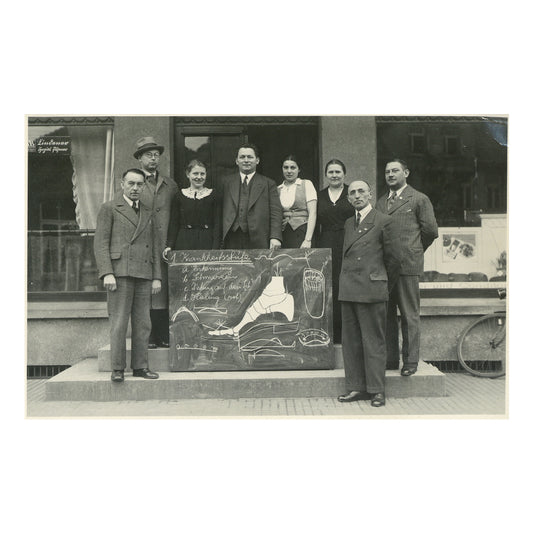
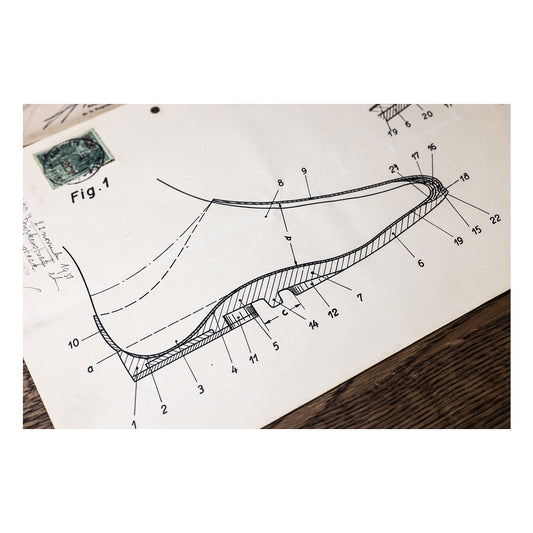
Konrad Birkenstock, master shoemaker has two shoe specialty stores in Frankfurt and is starting to make footbed insoles.

For about 15 years Konrad Birkenstock is holding seminars and lectures to other masters and guilds to explain his ideas for a custom shoe and to get license contracts for the production of his footbed shoes. He starts travelling extensively throughout Germany and Austria.

1913

Carl Birkenstock, the eldest son, joins the family business.

1915

During the war, Konrad Birkenstock sr. is hired by the Frankfurt-Friedrichsheim hospital's orthopeadic workshop to manufacture footwear for wounded soldiers. Prof. Dr. med. Lundhoff, hospital director, approves and sponsors these shoes made by Konrand Birkenstock.

Konrad Birkenstock jr. joins the company. A large factory is purchased in Friedberg, Hessen. The large customer base makes it necessary to work in day and night shifts. The product: The Blue Footbed. It is successfully sold in Austria, Italy, France, Denmark, Czechoslovakia, Luxembourg, Belgium, Norway, The Netherlands, Sweden and Switzerland.

1932

Start of the famous Birkenstock classes. More than 5,000 specialists are trained during the weeklong seminars in the following years. Leading doctors support the Birkenstock system.

1947

The book "Podiatric System Birkenstock" is published. 112 pages, 55 pictures, 14,000 copies. The most widely read and published textbook on podiatry of its time.

1954

Karl Birkenstock joins the family business.

1966

The self-colouring footprint paper has been successfully dveloped. The process is patented in Germany, the U.S. and most European countries. The new self-colouring footprint paper makes it viable to sell Birkenstocks via mail order.

1969

Birko-Cork, a malleable thermal cork, is developed for orthopaedic use.

1972

The "Book about Foot Health" goes to print. First edition: 30,000 copies.

1973

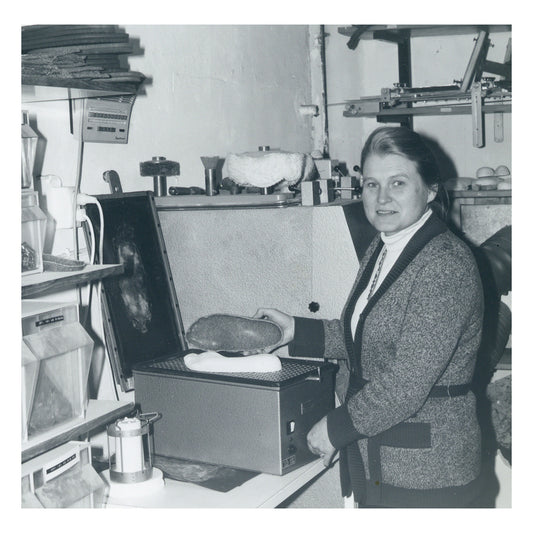
The first electro-mechanical moulding machine is developed. The machine uses a single adjustable mould to produce all sizes and widths in the correct proportions. This innovation puts Birkenstock far ahead in world markets.

1974

Leather cutting production begins in St. Katharinen.

1979

St. Katharinen receives additional modern cutting machines, equipped with 100-ton punch capacities.

1980

The electro-mechanical moulding machine of 1973 is replaced with a new computer controlled system. This system produces four sizes simultaneously.

1982

After three years of developing the thong sandal, it is introduced in five different styles.

1983

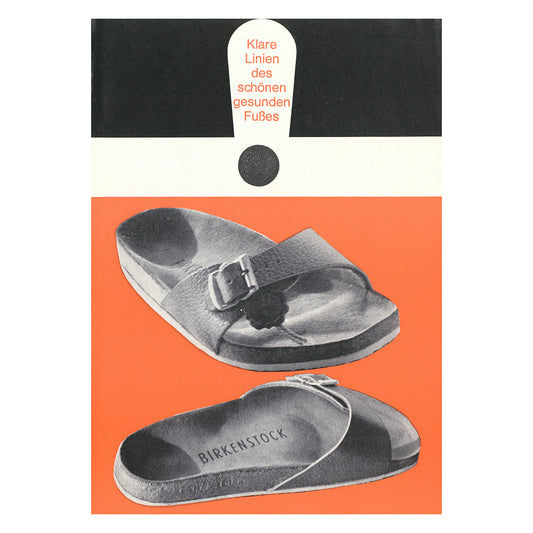
The "Birkenstock Fussfibel" is published, first edition 360,000 copies. Two patents for Birkenstock thong sandals are registered.

1984

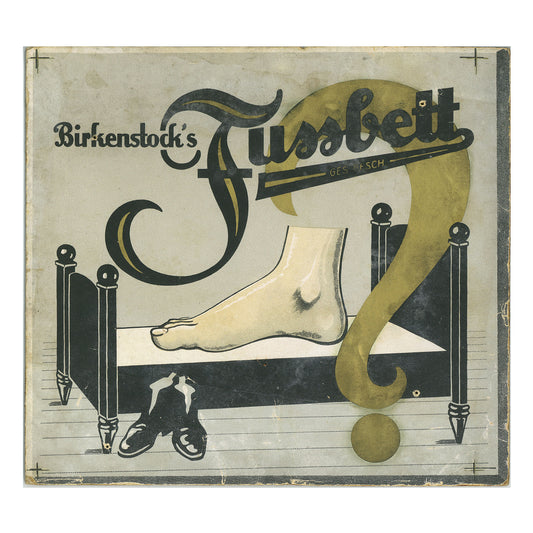
Alex Birkenstock joins the company. Six additional patents for thong sandals and several other patents are registered for Birkenstock. Move to a bigger warehouse to improve customer service. The goal: to ship incoming orders the same day. The patent for "Fussbett" is extended for another ten years. Specialty stores order approximately 14 million consumer brochures.

1985

New Birkenstock shoes are put into production. A new material, Birko-Cell is introduced to the orthopeadic market.

1986

The new Birko Sport insole is offered to stores.

1987

The Birkenstock branch in St. Katharinen is equipped with additional leather cutting machines. A warehouse is added. For the first time ever, Birkenstock produces styles in large sizes up to size 50. More than 2 million specialty catalogues are used for marketing purposes.

1989

Birkenstock takes over ALSA with its sole and footbed production. A new four storey building for the production of insoles is built in addition to a new facility for orthopeadic production in Asbach.

Stephan Birkenstock joins the company. Expansion and modernisation of insole production for the benefit of the environment: Energy consumption is lowered by 90% and large heat regeneration units are installed into the ventilation system. In addition, new systems using heat for the generation of electricity and gas filtration are installed.

After the fall of the "Iron Curtain", Birkenstock is one of the first companies to commit to the Sachsen state and is now operating three facilities in the area with over 450 employees.

Birkenstock establishes Tatami, a brand for leading orthopeadic specialty stores. The first styles, crafted on a new patented footbed, are well received by the public.

1991

The Papillio brand with its zesty shapes and always current colour programmes is developed. The president of the German parliament, Rita Suessmuth, visits Birkenstock.

1992

Birkenstock delivers the first hand-stitched comfort shoes.

1993

Construction of a large distribution centre in Vettelschoss has started. Birkis is established and Alex Birkenstock becomes CEO.

1994

Christian Birkenstock sets up Betula, a new brand of affordable, alternative sandals and new footbed shapes. The attraction of Betula: new classic and fashion colour combinations every month.

1995

Birkenstock's hand stitched comfort shoes are now marketed by the newly established company Footprints, which is registered as an independent brand worldwide. Construction of a new warehouse in Asbach. A system is developed to incorporate the upper material into the PU foam footbed. Birkis is the first brand to use this new system to produce sandals without the use of glues.

1996

New high rise rack warehouse begins operating in Asbach. Groundbreaking ceremony for a new shipping facility in Vettelschoss takes place in July.

1997

The first orders are shipped from the new Vettelschoss facility in the Spring of 1997. Leading edge technologies are applied in this new facility.

1998

The Birkenstock administration and sales offices are moved from Bad Honnef to Vettelschoss. In the spring of 1998 the retailer meetings hosted by Birkenstock are resumed.

Betula purchases the castle "Burg Ockenfels" and transforms it into its customer service centre. In October, the new fully automated box storage unit with a capacity of 10,000 cartons becomes operational. Computer controlled processing enables shipping and receiving of 80,000 pairs of shoes per day.

1999

Birkenstock is celebrating its 225th anniversary. Rising out of a shoe-maker's shop in 1774, Birkenstock is now supplying customers all over the world.

The planning stage of a second shipping facility in Vettelschoss in beginning to take shape. Birkenstock presents its products for the first time with a homepage on the internet: www.birkenstock.de. The second international dealer meeting with more than 200 partici-pants takes place at the customer service centre in Vettelschoss.

The Footprints company expands its program into a trekking collection as well as a ladies' and men's dress shoe line. Birkis is able to produce the world's first super light weight EVA clog .

2000

The brand Tatami, founded by Alex Birkenstock in 1990, celebrates its 10th anniversary. The Footprints brand now offers an elegant men's dress shoe collection.

The brand Birkis introduces an EVA sandal collection manufactured without any glues. Plans are being made for a new automatic box storage system. This new system will enable staff to ship individual pairs of shoes even faster than before.

2001

The production unit, S.S.P. is celebrating its 10th anniversary in Bernstadt/Saxony. The new automatic order picking machine has been completed, making it possible for 6,000 individual pairs of shoes to be added or removed from warehouse stock by computer each day enabling supply to customers within 24 hours of ordering.

2002

The popular classic Boston, worn by many people around the world, is celebrating its 25th anniversay. An exclusive anniversary series is being presented.

2003

30 years Arizona. Birkenstock celebrates the jubilee of one of the most successful sandals.